
The story of Allen
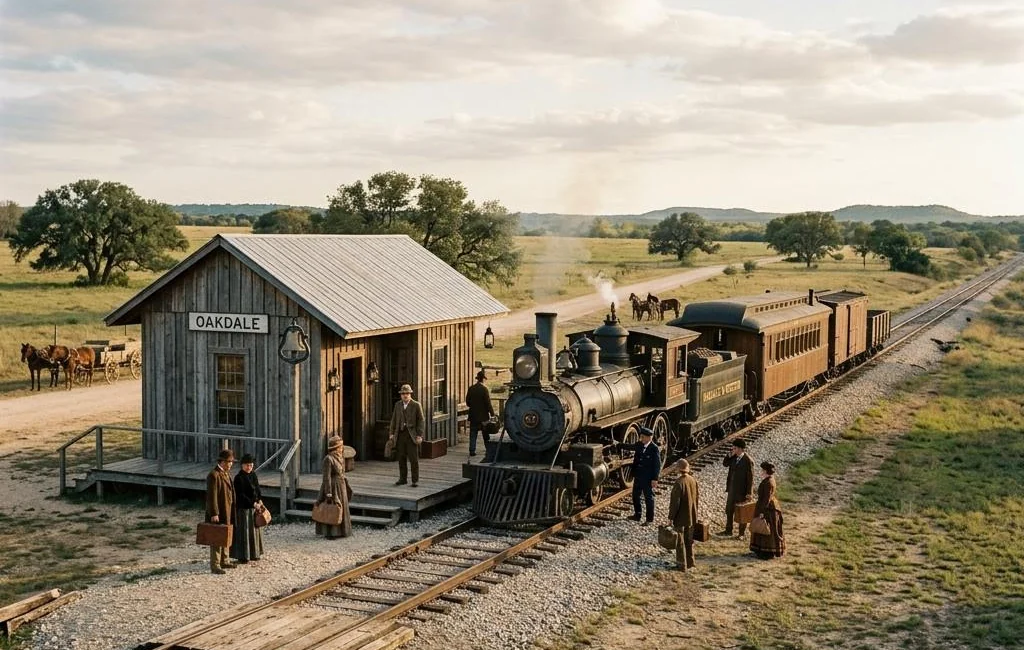
Before American settlement, the Caddo, Comanche and other Indigenous peoples lived in the area. Settlers arrived from the 1840s, drawn by fertile land and plenty of water, and in 1870 the Houston and Texas Central Railway established a railroad town here. It took the name Allen in 1872, for Ebenezer Allen, a former Texas attorney general who had promoted the railroad.
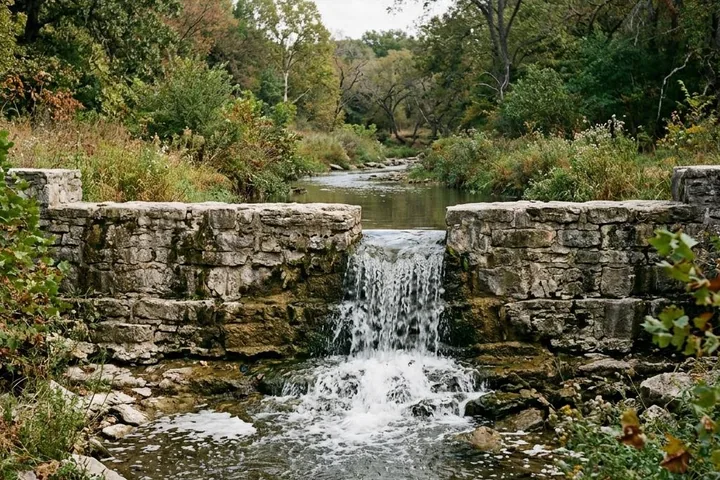
The railroad shaped everything. Steam engines needed water, so in 1874 the railroad built a stone dam and water station on Cottonwood Creek. The stop gave farmers a commercial center and wider markets. In 1878 Sam Bass's gang robbed a train at Allen, which the Handbook of Texas calls supposedly the state's first train robbery.
Allen stayed a small farm town for nearly a century. It had about 350 residents in 1884 and was still home to about 400 people when it incorporated in 1953.
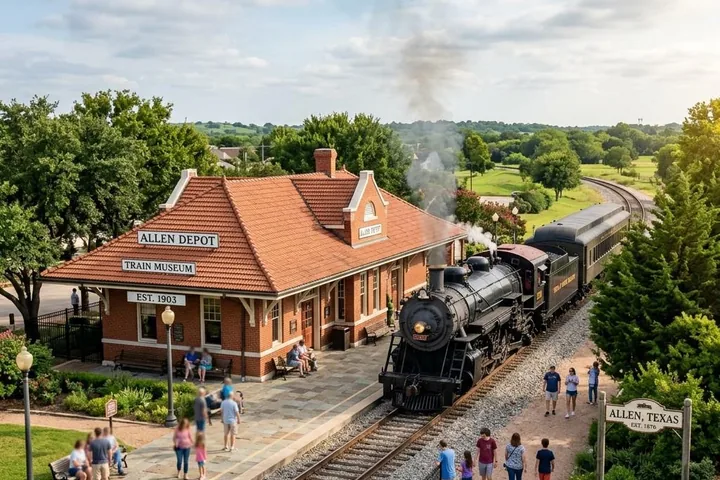
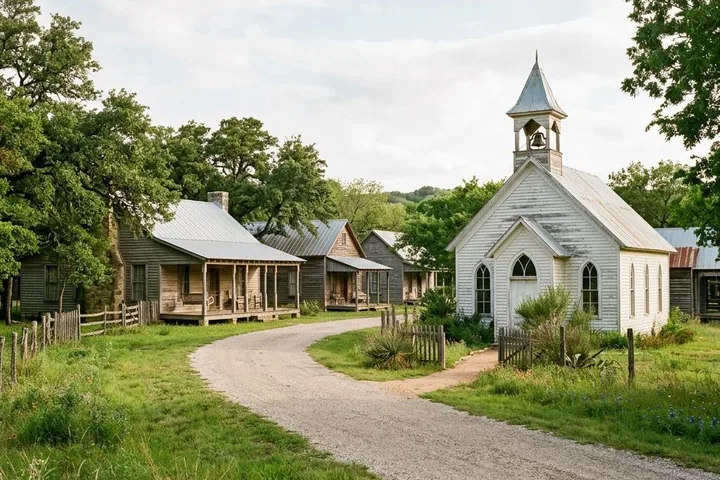
Then Dallas and Plano grew north and Dallas–Fort Worth International Airport was built, and Allen grew with them: from 1,940 residents in 1970 to 104,627 at the 2020 census. The old buildings didn't disappear. Allen Heritage Village and the depot museum keep the railroad town's homes, churches and stories within a few blocks of each other.